Cold Emailing: The Complete Guide to B2B Outreach That Gets Results in 2026
HotHawk is cold email software for serious outbound teams.
Special offer
Get 50% more sending, FREE.
50% extra sending on any plan, every month.
On this page
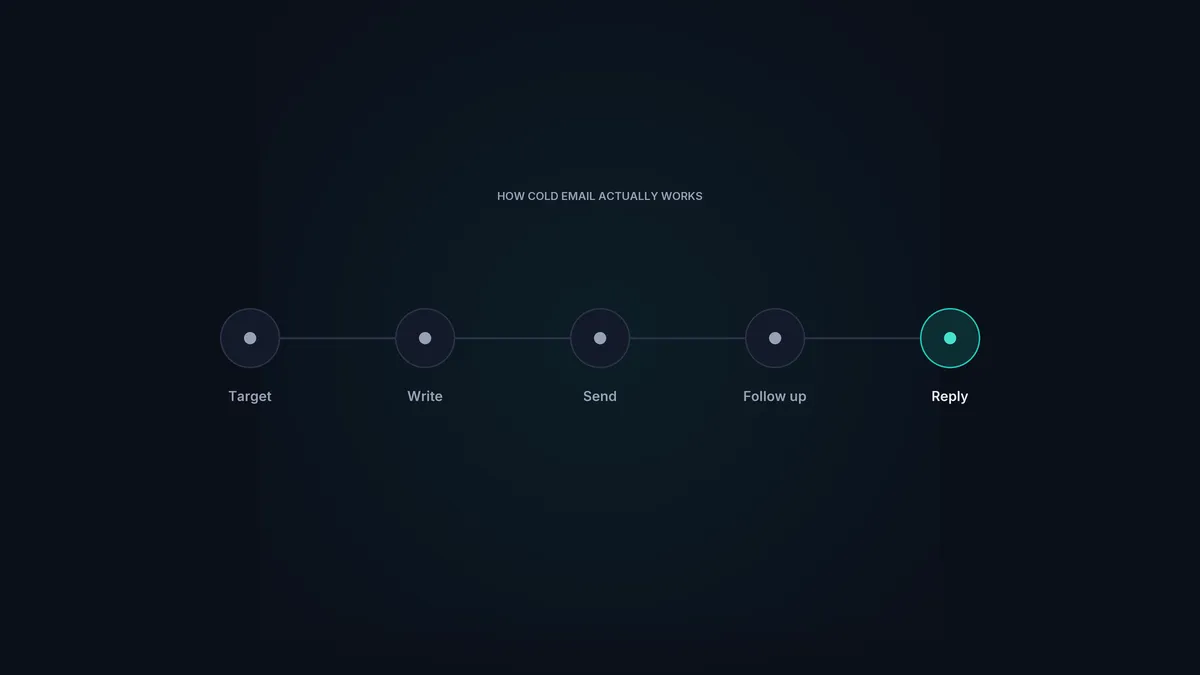
Cold emailing is reaching out to someone who’s never heard of you, by email, to start a business conversation. Done badly it’s spam. Done well it’s the most predictable way a B2B company has of creating pipeline on demand, because you decide exactly who to talk to and you control how many you reach.
This is the complete guide. It covers who to target, how to write an email people actually reply to, the subject lines, the follow-ups, the deliverability that decides whether any of it arrives, and what’s changed in 2026. It’s the hub for everything in this section, so use the links to go deeper on any piece.
The short version
- Cold emailing works when it's relevant and targeted, not when it's high-volume and generic.
- The list comes first; a great email to the wrong people still gets nothing.
- The format is a system: subject, opener, value, ask, each with one job.
- Most replies come from the follow-ups, not the first email.
- Deliverability decides whether any of it reaches the inbox, so it's not optional.
Does cold emailing still work in 2026?
Yes, and arguably better than it has in years, because the bar went up. Mailbox providers tightened their rules, the spray-and-pray crowd got filtered harder, and that cleared space for senders who do it properly. Relevance wins now in a way it didn’t when you could blast a hundred thousand emails and live off the scraps.
What doesn’t work any more is volume for its own sake. The model where you buy a giant list and hammer it is dead, both because providers punish it and because buyers have seen a thousand of those emails and delete on sight. The version that works is narrower and sharper: the right people, a real reason to email, and a message that reads like a person wrote it. The rest of this guide is how you do that.
Start with the list, not the email
Here’s the thing most people get backwards. They obsess over the email and barely think about who it’s going to. It should be the other way round. The single biggest lever in cold email is who you target, because a brilliant email to the wrong person still gets you nothing, and an average email to exactly the right person at the right moment gets a reply.
So before you write a word, get clear on who you’re selling to. Define a tight ideal customer profile: the industry, company size, the role you’re emailing, and the trigger that makes them worth reaching now. Then build a list of real, verified people who match it. Verify the addresses, because bounces wreck your deliverability faster than almost anything.
Get the list right and everything downstream gets easier. Get it wrong and no amount of clever copy saves you.
The anatomy of a cold email
A cold email is a small system, and each part has one job. Get the structure right and the writing gets a lot simpler. We break it down fully in the cold email format guide, but here’s the shape:
- Subject line. Its only job is to earn the open. Short, specific, no clickbait. More on this below.
- Opening line. Earns the next sentence. This is where relevance lives, the line that proves you’re emailing them on purpose, not blasting a list.
- The value. Why you’re worth a reply. Not your feature list, the outcome you get them, ideally tied to their situation.
- The ask. One clear, low-friction next step. Not “let me know your thoughts”, an actual question they can answer in one line.
Keep it short. A cold email that needs scrolling is too long. If you want the parts pulled apart sentence by sentence, the how to write cold emails guide does exactly that, and the cold email examples piece shows real ones that booked meetings.
Subject lines
The subject line is a gate. If it doesn’t earn the open, nothing else you wrote matters. The ones that work in cold email are usually short, specific, and a little understated, the kind of thing a colleague might actually send. The ones that don’t are the over-clever, salesy, ALL-CAPS-and-emoji efforts that scream “marketing email”.
A few that pull their weight: a plain question tied to their world, a two or three word subject that reads like an internal note, a reference to the specific trigger you’re emailing about. We’ve collected 50+ cold email subject lines with the patterns behind them, but the principle is simple: write the subject a real person would open, not the one a marketer would write.
Personalisation: the one line that proves you looked
“Personalisation” gets mangled into dropping a first name into a template, which fools nobody. Real personalisation is one line that shows you actually understand who you’re emailing: a reference to something they did, shipped, hired for, or announced. It’s the difference between an email addressed to someone and one that was clearly processed.
You don’t need to personalise the whole email. One genuinely relevant line, on top of a clear message, does the job. The trap is faking it, a smooth-sounding opener about a company you know nothing real about reads worse than no personalisation at all. If you’ve got a real signal, use it. If you haven’t, keep it honest and simple.
Follow-ups: where most of the replies live
If you send one email and stop, you’re leaving most of your results on the table. The data is consistent on this: a large share of replies come from the second, third and fourth touches, not the first. People are busy, your email arrived at a bad moment, they meant to reply and forgot. A polite follow-up catches them on a better day.
The art is following up without being annoying. Space them out, keep them short, and add something each time rather than just “bumping this to the top of your inbox”. Know when to stop, too. We cover the whole thing, how many to send, the timing, what to actually say, in the reply management section, which is the other half of making cold email work.
Deliverability: the part that decides everything
You can do all of the above perfectly and still get nothing, if your emails are sitting in spam. Deliverability is whether your email actually reaches the inbox, and it’s the quiet thing behind every result. It’s also the part most senders understand least, which makes it a real edge if you learn it.
The essentials: authenticate your domain with SPF, DKIM and DMARC, which is now mandatory rather than nice-to-have. Warm up any new mailbox before you send from it. Keep your volume sane per mailbox and spread it with inbox rotation. Keep your list clean so you’re not throwing bounces. The full picture is in the deliverability guide, and it’s worth your time, because it’s the difference between sending and being seen.
Email vs the other channels
Email isn’t the only way to reach people, and the best outbound usually combines a few. But email is the backbone, because it’s the one channel you can run at real volume, automate reliably, and personalise without a human sending each one. Calls reach people email can’t and build rapport faster, but they don’t scale the same way; we put the two side by side in cold email vs cold call. LinkedIn adds a warmer, lower-pressure touch alongside.
Most strong cadences use email as the spine and slot calls and social around it, so the scalable channel carries the volume and the human channels carry the high-value moments. How those touches fit together is the job of a sales cadence.
The tools you actually need
The cold email stack has three layers: data to build the list, a sender to run the outreach, and somewhere to handle the replies. The sender is where most of it lives, and the job it has to do well is deliverability and reply handling: reaching people reliably, and catching every reply across every mailbox so nothing slips.
That’s what HotHawk is built for. The email sequencer runs multi-step campaigns with warmup and inbox rotation underneath, and the master inbox pulls every reply, including forwarded and CC’d ones, into one place and routes each to the right person. You can even run the whole thing from Claude over MCP if you’d rather drive it by asking. The point isn’t the features, it’s that the unglamorous parts, getting delivered and catching replies, are exactly where cold email breaks down without the right tool.
The engine room of cold email
HotHawk runs the cold email backbone: multi-step campaigns with warmup and rotation, and a master inbox that catches every reply. Built for teams sending at volume.
See the email sequencerCold emailing beyond sales
The same playbook works outside B2B sales, with the tone dialled to fit. Cold emailing a hiring manager for a job, reaching out for an internship, or contacting someone for research all run on the same principles: target the right person, lead with relevance, make one clear ask, and follow up politely. The structure travels; you just adjust the voice.
And if you want a framework that’s stood the test of time, the Tim Ferriss cold email template is worth a look, it’s fifteen years old and the bones of it still hold up.
A few common questions
Does cold emailing actually work? Yes, when it’s relevant and targeted. The high-volume, generic version is dead, punished by providers and ignored by buyers. The version that works reaches the right people with a real reason to email and a message that reads like a person wrote it.
Is cold emailing legal? B2B cold email is legal in most places when you follow the rules: be honest about who you are, target business addresses with a genuine reason, and give people an easy way to opt out. Check the specific rules for the regions you’re emailing.
How many cold emails should I send? Fewer than you think, better targeted. Volume for its own sake hurts your deliverability and your reply rate. Start with a tight list and sane per-mailbox volume, spread across mailboxes with rotation, and scale once it’s working.
Cold emailing rewards the people who treat it as a craft, not a numbers game. Get the list right, write like a human, follow up properly, and protect your deliverability. Do that and it becomes the most reliable growth lever you’ve got. Start anywhere in this section, or with the deliverability guide, since that’s the piece most people skip and most need.
