The Outbound Sales Playbook: SDRs, B2B Lead Generation, and Cold Outreach in 2026
HotHawk is cold email software for serious outbound teams.
Special offer
Get 50% more sending, FREE.
50% extra sending on any plan, every month.
On this page
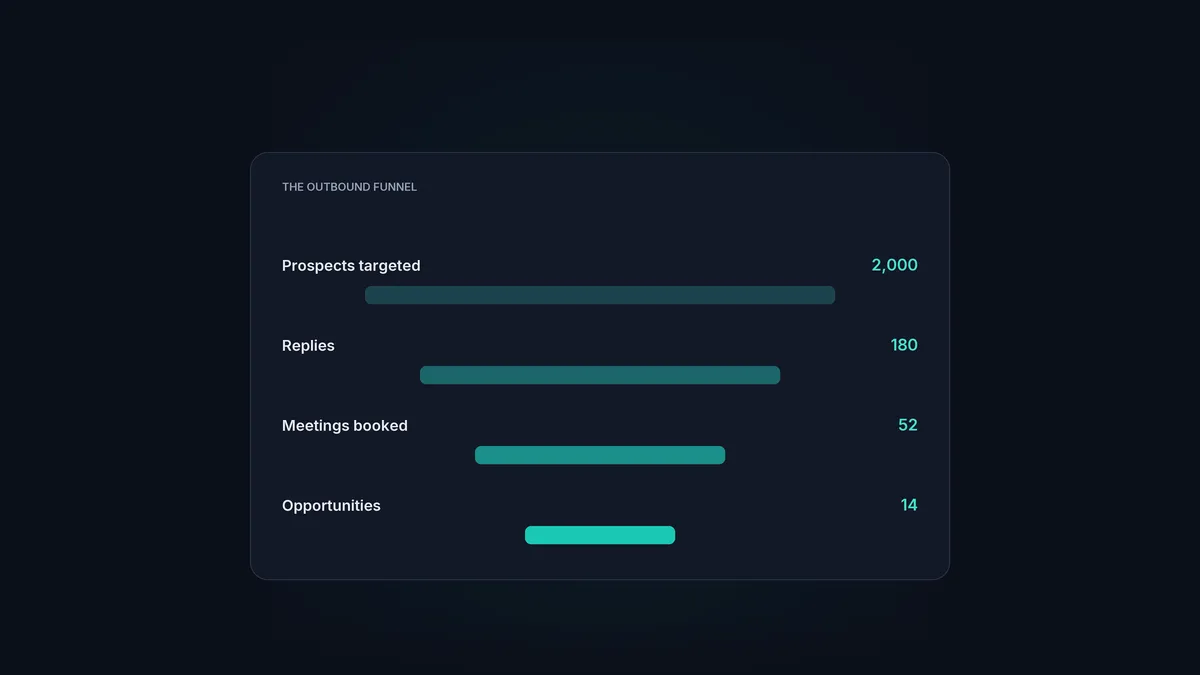
Outbound sales is the discipline of going out to find your customers rather than waiting for them to find you. You decide who you want to sell to, reach out directly, and work a deliberate process to turn cold prospects into booked meetings and pipeline. Done well it is the most predictable growth engine a B2B company has, because you control the inputs.
This playbook covers the whole thing: who does outbound, the process they run, the channels they use, how lead generation fits, and the metrics that tell you whether it is working. It is the hub for everything in this section, so use the links to go deeper on any piece.
The short version
- Outbound sales means proactively reaching prospects, rather than waiting for inbound interest.
- The team is usually SDRs or BDRs doing the prospecting and AEs closing the deals.
- The process is a funnel: define an ICP, build a list, run multi-touch outreach, book meetings, work pipeline.
- Email is the scalable backbone, with calls and LinkedIn around it.
- Measure the funnel, not activity. Replies, meetings and pipeline matter more than emails sent.
What outbound sales is (and is not)
Outbound sales starts with you. You pick a target market, build a list of accounts and people, and reach out cold to start conversations. That is the opposite of inbound, where prospects come to you through content, ads or word of mouth.
The big advantage of outbound is control. You are not waiting for demand to show up; you are creating it on a schedule, against the exact accounts you want. The trade-off is that it takes real process and discipline, because you are interrupting people who did not ask to hear from you, which means relevance and timing have to do a lot of work.
Most B2B companies need both motions. Inbound builds a brand and catches ready buyers; outbound reaches the rest and gives you a predictable, controllable source of pipeline.
The outbound sales team
Outbound is usually run by a few specialised roles:
- SDRs (Sales Development Representatives). The prospecting engine. They research accounts, run the outreach, and book qualified meetings for the closers. Start with what an SDR is for the full role breakdown, and the SDR salary guide for what they earn.
- BDRs (Business Development Representatives). Often used interchangeably with SDR, though some teams split the titles. The SDR vs BDR guide covers when the distinction matters.
- AEs (Account Executives). The closers. They take the qualified meetings the SDRs book and run them to a deal.
In a small company or founder-led sale, one person wears all these hats. As you scale, you split them so each role can specialise.
The outbound process, step by step
Strip away the jargon and outbound is a funnel with five stages.
- Define your ICP. Decide exactly who you are targeting: industry, company size, role, and the trigger that makes them relevant now. This is the highest-impact decision in the whole motion. Build one with the ideal customer profile guide.
- Build the list. Find the real people who match the ICP, with verified contact details. You can build this in-house or buy it from data providers.
- Run multi-touch outreach. Reach each prospect several times, across channels, with a deliberate message at each touch. This is where most of the work and most of the results live.
- Book and qualify meetings. Turn replies into booked, qualified meetings for the AEs.
- Work the pipeline. Hand qualified meetings to closers and track them through to revenue.
Each stage has a conversion rate, and small improvements compound. Doubling your reply rate and your meeting-booked rate does not add up, it multiplies.
The channels: email, phone, and social
Outbound runs on three main channels, and the best teams combine them into a sales cadence:
- Email is the scalable backbone. It is the only channel you can run at real volume, automate reliably, and personalise without a human sending each one. A cold email sequencer does the heavy lifting here.
- Phone is high-effort and high-signal. An outbound call reaches people email cannot and builds rapport email cannot, but it does not scale the same way.
- LinkedIn and social add a warmer, lower-pressure touch alongside the other two.
Most cadences use email as the spine and slot calls and social touches around it, so the automated channel carries the volume and the human channels carry the high-value moments.
How lead generation fits
Lead generation is the front of the outbound funnel: getting the right contacts to reach out to in the first place. You can do it yourself, buy data, or hire it out to a B2B lead generation company. The wider set of tactics, including outbound, inbound and paid, is covered in B2B lead generation strategies.
The thing to remember: the quality of your list sets the ceiling on everything downstream. A brilliant outbound process aimed at the wrong people loses to an average process aimed at the right ones.
Where AI fits in 2026
AI has changed the mechanics of outbound without changing the fundamentals. It helps with research, personalisation at scale, lead scoring, and drafting, which frees reps to spend their time on the conversations that need a human. What it has not done is remove the need for a clear ICP, a real message, and genuine follow-through. The what is AI sales guide covers what is real and what is hype.
The tools
The outbound stack usually has three layers: data (to build the list), a sender (to run the outreach), and a CRM (to track the pipeline). Some teams bolt these together; others buy a single sales engagement platform that spans them.
For the sender layer specifically, the job is deliverability and reply handling: reaching people reliably and catching every reply. That is what HotHawk’s email sequencer and reply management inbox are built for, and it is where a lot of outbound quietly breaks down.
The engine room of outbound
HotHawk runs the email backbone of your outbound: multi-step campaigns with warmup and rotation, and a master inbox that catches every reply. Built for SDR and sales teams.
Start your 7 day free trialThe metrics that actually matter
Outbound generates a lot of vanity metrics. Ignore most of them and watch the funnel:
- Reply rate and positive reply rate. Are your messages connecting with the right people? Positive replies are the leading indicator of pipeline.
- Meetings booked. The real output of the SDR function.
- Meeting-to-opportunity rate. Whether the meetings are actually qualified.
- Pipeline and revenue. The only numbers that pay the bills.
“Emails sent” and “activities logged” measure effort, not results. A team sending half the volume with double the relevance wins every time. Build for the sales team or SDR team you actually have, and optimise the conversions, not the activity count.
A few common questions
What is outbound sales? Proactively reaching out to target prospects to start sales conversations, rather than waiting for inbound interest. It gives you a predictable, controllable source of pipeline.
What roles run outbound sales? Usually SDRs or BDRs do the prospecting and book meetings, and AEs close the deals. In smaller teams one person does all of it.
How do I start an outbound motion? Define a tight ICP, build a list of real contacts, run multi-touch outreach with email as the backbone, and measure replies, meetings and pipeline rather than activity.
Outbound sales is not complicated, but it is unforgiving of shortcuts. Get the ICP right, run a disciplined multi-touch process with email at its core, and measure the funnel rather than the busywork. Do that consistently and outbound becomes the most predictable growth lever you have.
