Inbound vs Outbound Sales: Key Differences, Pros, Cons, and Which to Use When
HotHawk is cold email software for serious outbound teams.
Special offer
Get 50% more sending, FREE.
50% extra sending on any plan, every month.
On this page
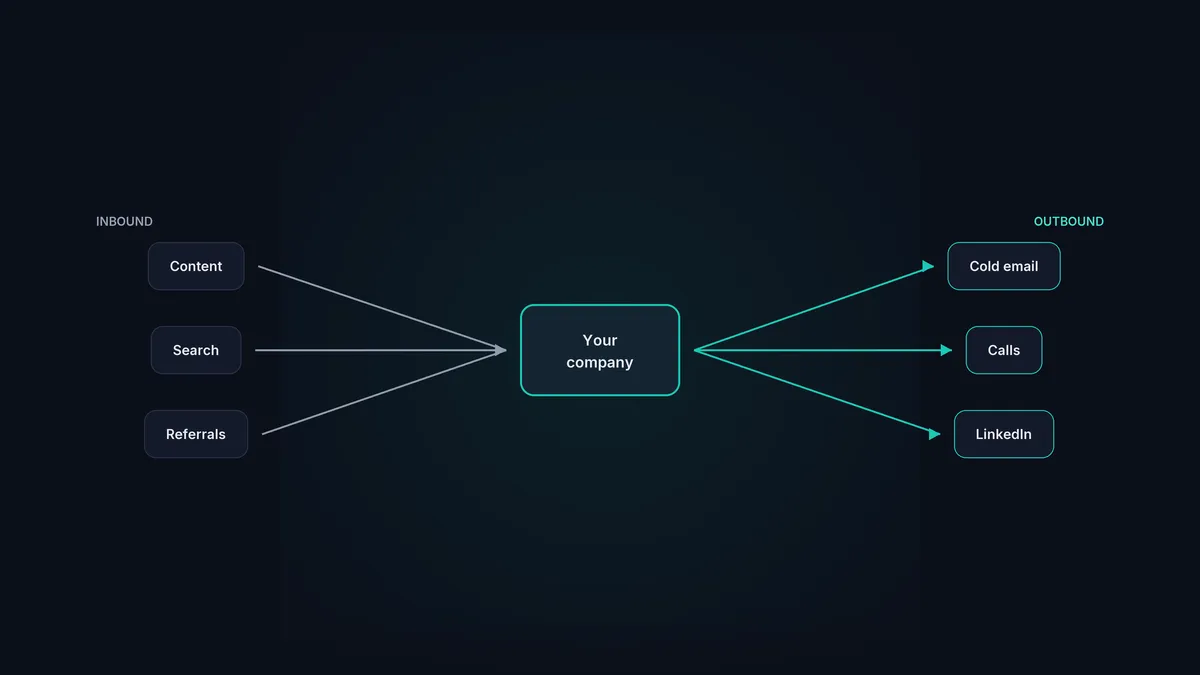
The difference between inbound and outbound sales comes down to one question: who reaches out first. With inbound, the prospect comes to you, drawn in by content, search, ads or word of mouth. With outbound, you go to them, reaching out cold to people who have not raised a hand.
That single difference, who initiates, drives everything else: the speed, the cost, the control you have, and how it scales. Here is how the two compare and how to decide where to put your effort.
The short version
- Inbound: prospects come to you. Outbound: you go to them.
- Inbound is slower to build but compounds; outbound is faster to start and fully in your control.
- Inbound leads are usually warmer; outbound reaches people who would never have found you.
- Most B2B companies need both, with the mix shifting as they grow.
- Cold email is the scalable core of the outbound side.
What each one is
Inbound sales works by attracting prospects to you. You publish content, rank in search, run ads, build a brand, and wait for interested buyers to come forward. By the time an inbound lead reaches a rep, they already know who you are and have shown some intent.
Outbound sales works the other way. You decide who you want to sell to, build a list, and reach out directly, by cold email, phone and LinkedIn, to people who were not looking for you. You are creating the conversation rather than catching it.
The key differences
| Inbound | Outbound | |
|---|---|---|
| Who initiates | The prospect | You |
| Lead temperature | Warmer | Colder |
| Speed to start | Slow to build | Fast |
| Control over volume | Low | High |
| Cost shape | Upfront, compounding | Ongoing, predictable |
| Scales by | Content and reputation | Process and tooling |
The headline trade-off: inbound is slower to get going but compounds over time, while outbound starts producing quickly and gives you direct control over how much pipeline you create.
The pros and cons
Inbound pros: warmer leads, lower cost per lead once it is working, and it compounds, a good piece of content keeps pulling in leads for years. Inbound cons: slow to build, hard to control the volume or timing, and you are at the mercy of search algorithms and attention.
Outbound pros: fast to start, fully controllable (you decide exactly who to target and how much to send), and predictable, more activity reliably means more pipeline. Outbound cons: you are interrupting people who did not ask, so relevance has to do heavy lifting, and it takes real process and the right tools to do well.
When to use which
- Lean on inbound when you have time to build, a strong brand or content engine, and a product people actively search for. It is a long game that pays off.
- Lean on outbound when you need pipeline now, you know exactly who your buyer is, or your market is too small or too specific to wait for them to find you. It is the controllable, fast option.
- Use both when you are a growing B2B company, which is almost always. They are complementary: inbound builds the brand that makes outbound more effective, and outbound creates pipeline while inbound compounds in the background.
Most teams start outbound-heavy because it works fast, then layer in inbound as they grow and the brand takes hold. The SDR vs BDR split often maps onto exactly this division of labour.
Where cold email fits
On the outbound side, cold email is the scalable backbone. It is the only outbound channel you can run at real volume, automate, and personalise without a human sending each message, which is why it sits at the centre of nearly every outbound motion. Calls and LinkedIn add the high-touch moments around it.
Getting that engine right, protecting deliverability and catching every reply, is what HotHawk’s email sequencer and reply management inbox are built for. The full picture of building the outbound side sits in the outbound sales playbook.
A few common questions
What is the difference between inbound and outbound sales? With inbound, the prospect comes to you through content, search or ads. With outbound, you reach out cold to prospects who have not expressed interest. The difference is who initiates.
Is inbound or outbound better? Neither is universally better. Inbound is slower but compounds; outbound is faster and more controllable. Most B2B companies need both, with the mix shifting over time.
Which should a new company start with? Usually outbound, because it produces pipeline quickly and you control it. Inbound is layered in as the brand and content build over time.
Inbound and outbound are not rivals; they are two halves of a complete go-to-market. Inbound compounds slowly and pulls warm buyers in; outbound starts fast and lets you create demand on demand. Pick your mix based on how quickly you need pipeline and how well you know your buyer, and build the outbound engine to match.
