Email Domain Blacklist Check: What to Do If You're Listed and How to Recover
HotHawk is cold email software for serious outbound teams.
Special offer
Get 50% more sending, FREE.
50% extra sending on any plan, every month.
On this page
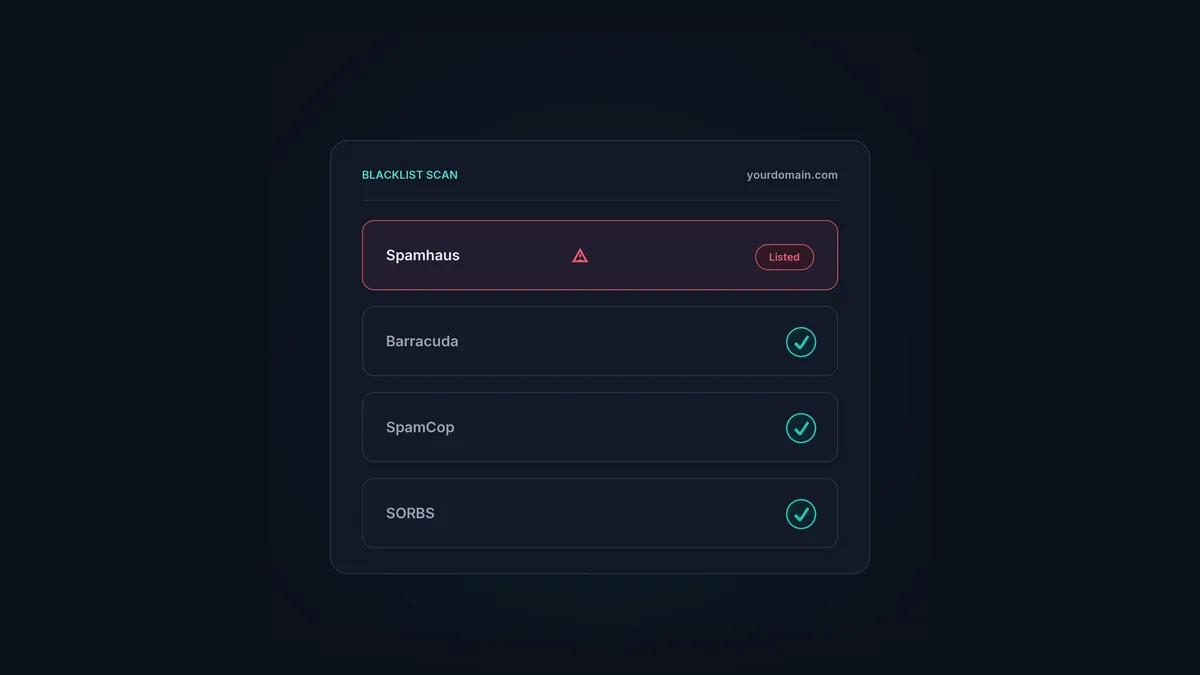
An email blacklist is a database of domains and IPs known for spam, which mailbox providers check before they accept your mail. If your sending domain or IP is on one, your cold email can go straight to spam or get blocked altogether, no matter how clean everything else is. It’s one of the few deliverability problems that’s properly binary: you’re listed or you’re not.
The good news is it’s checkable, and usually fixable. This covers how to check, which lists actually matter, the step-by-step to get delisted, and how to avoid ending up back on one.
The short version
- A blacklist flags domains and IPs known for spam, and providers use them to filter mail.
- Being listed can send your cold email to spam or block it entirely.
- Check your domain and IP against the major lists with a free blacklist checker.
- Some blacklists matter far more than others; Spamhaus is the big one.
- Delisting means fixing the cause first, then requesting removal through the list's process.
How blacklists work
When a provider receives your email, one of its checks is whether your sending IP or domain shows up on known blacklists, sometimes called blocklists or DNSBLs. These lists are run by organisations that track spam sources, often using spam traps: addresses that exist purely to catch senders mailing lists they shouldn’t have.
If you’re on one, the provider has a ready-made reason not to trust you. Depending on the list and the provider, your mail gets filtered to spam or rejected outright. The check is fast and binary, so a single listing can knock over an otherwise healthy setup overnight.
How to check if you’re blacklisted
Checking is free and quick:
- Use a blacklist checker like MXToolbox, which queries your domain and sending IP against dozens of major blacklists at once and shows which, if any, have you listed.
- Check both the domain and the IP. They’re listed separately, and either one being flagged causes problems. If you’re on a shared sending service, other senders on it can drag your IP down too.
- Make it routine. A listing can happen with no warning, so check now and then rather than only when something breaks. It pairs nicely with your other deliverability testing.
If you come up clean on the major lists, blacklisting isn’t your problem, and you want to be looking at authentication, warmup or domain reputation instead.
Which blacklists actually matter
There are hundreds of blacklists, and most barely register. A handful do:
- Spamhaus is the big one, by a mile. Its lists are used by a huge share of mail servers worldwide, so a Spamhaus listing genuinely hurts. If you’re on one list and it’s Spamhaus, that’s the one to deal with first.
- A few other reputable lists like Barracuda and SpamCop carry real but smaller weight.
- Loads of minor lists are obscure, badly maintained, or barely used. A listing on one of those often makes no practical difference, so don’t panic over a long report if the major lists are clean.
So read a blacklist report by importance, not by count. One Spamhaus listing matters more than five obscure ones put together.
How to get delisted, step by step
- Find the cause. Why were you listed? Usual suspects: mailing a bought or scraped list, hitting spam traps, a sudden volume spike, high bounce or complaint rates, or a compromised account. Be honest with yourself about which.
- Fix it. Clean the list and pull every bounce. Kill the offending campaign. Pause the aggressive sending. Lock down the account if it was compromised. The fix has to be genuine, because the list operators check.
- Request removal through the list’s process. Each major blacklist publishes its own removal procedure. Spamhaus, for instance, has a removal centre where you submit your IP or domain. Follow that specific list’s steps; there’s no universal button.
- Re-warm and ramp gently. Once you’re delisted, treat the domain as fragile. Rebuild trust with warmup and a slow ramp rather than charging straight back to full volume.
- Watch it closely. Keep an eye on the blacklists and your reputation for a few weeks to confirm you stay off and your placement recovers.
How to avoid getting listed
Prevention is far cheaper than delisting. The habits that keep you off blacklists are the same ones that build domain reputation: verify your list and never mail scraped data, keep bounce and complaint rates low, ramp volume gradually, and spread your sends with inbox rotation so no mailbox looks abusive. Spam traps mostly live on old, scraped or bought lists, so list hygiene is your best protection by far.
Stay off the lists in the first place
HotHawk's native warmup, automatic inbox rotation and clean sending practices keep your domains healthy, so blacklisting stays a check you pass, not a fire you fight.
See how warmup worksA few common questions
How do I check if my email domain is blacklisted? Use a free blacklist checker like MXToolbox, which queries your domain and sending IP against the major blacklists at once. Check both the domain and the IP, since they’re listed separately.
Which email blacklist matters most? Spamhaus, by a mile, because its lists are used by a large share of mail servers. A Spamhaus listing genuinely hurts deliverability; plenty of obscure lists barely matter, so prioritise by importance.
How long does it take to get off a blacklist? It varies. Once you’ve fixed the cause and requested removal through the list’s process, delisting can take anywhere from a day to a couple of weeks. Request removal without fixing the cause and you’ll just get relisted.
A blacklisting feels alarming, but it’s one of the more fixable deliverability problems: free to check, weighted by a few lists that matter, and recoverable once you fix the cause and follow the removal process. Better still, the habits that prevent it are the same ones that keep your whole deliverability healthy.
