Cold Email Agency: The Complete Guide to Running Client Outreach at Scale
HotHawk is cold email software for serious outbound teams.
Special offer
Get 50% more sending, FREE.
50% extra sending on any plan, every month.
On this page
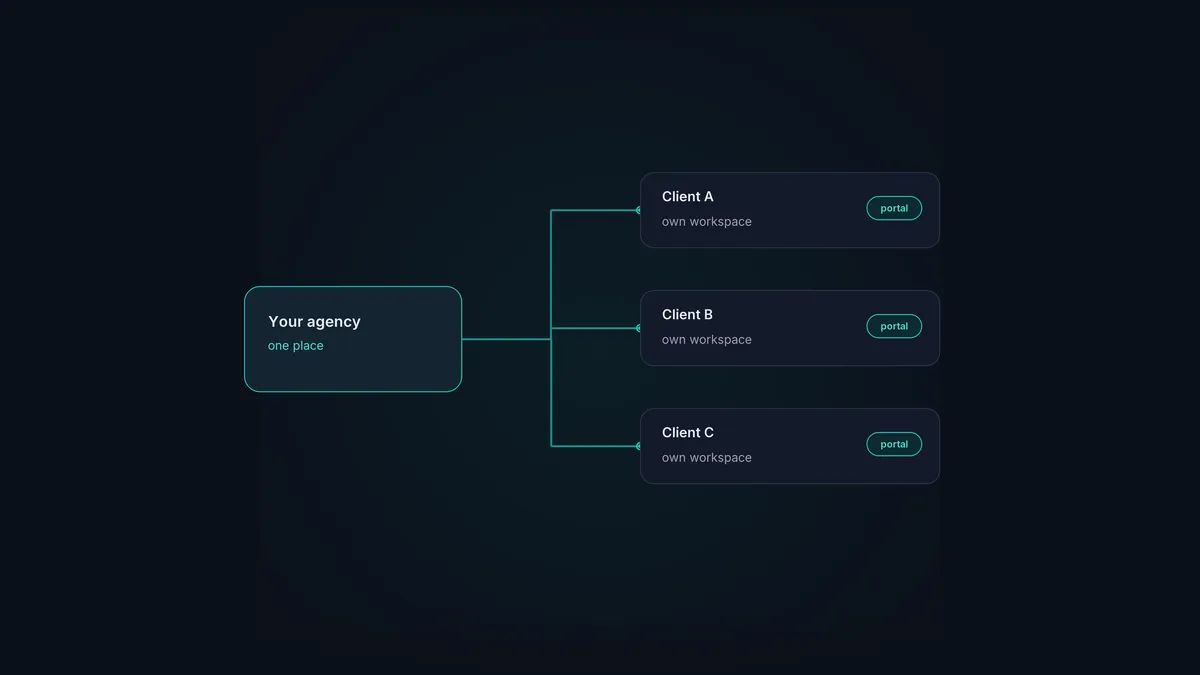
A cold email agency runs outbound on behalf of its clients: building the lists, writing the copy, managing the sending infrastructure, and handing back the meetings. Done well it’s a brilliant business, recurring revenue, high margins, and demand that isn’t going anywhere. Done badly it’s a treadmill of deliverability fires, messy reporting, and clients who churn the moment results dip.
This is the complete guide to running one at scale: how agencies are structured, how they price, how they manage a stack of client accounts without chaos, and the operational stuff that quietly decides whether you grow or stall. It’s the hub for this section, so follow the links to go deeper on any piece.
The short version
- A cold email agency runs outbound for clients: lists, copy, sending, and reporting.
- The model is great when deliverability and client management are solid, painful when they aren't.
- Scaling is an operations problem: many client accounts, clean reporting, no mixed-up data.
- A white-label client portal is a real retention lever, not a nice-to-have.
- The right toolstack removes most of the work that doesn't scale.
What a cold email agency actually does
Strip it back and a cold email agency sells outcomes, usually qualified meetings, by running the whole outbound motion for a client who doesn’t want to build it in-house. That means four jobs: building targeted lists, writing copy that gets replies, running the sending infrastructure so it actually reaches inboxes, and reporting results back in a way the client trusts.
The first two are craft. The second two are where agencies live or die operationally, because deliverability and reporting are what break when you go from three clients to thirty. A cold outreach agency that’s great at copy but loses half its sends to spam doesn’t keep clients for long.
How agencies are structured
Most cold email agencies fall into a familiar shape as they grow:
- Founder-led, early on. One or two people doing everything: sales, copy, sending, reporting. Fine up to a handful of clients, impossible past it.
- Pod or role-based, scaling up. Splitting the work, list building, copywriting, campaign management, client success, so each part can specialise and you’re not the bottleneck.
- Productised, at maturity. A repeatable service with defined deliverables, a standard onboarding, and systems that let you add a client without adding chaos.
The jump that breaks most agencies is the second one, going from “I do everything” to “we run a system”. If you’re starting out, the how to start a cold email lead generation agency guide covers the early decisions; the rest of this is about the system you grow into.
Pricing the service
How you price shapes the whole business. The three common models:
- Flat retainer. A fixed monthly fee for a defined service. Predictable for both sides, and the easiest to forecast against.
- Pay-per-meeting (performance). You’re paid for results, which clients love and which can be brutal on your margins if deliverability slips.
- Hybrid. A smaller retainer plus a performance kicker, which balances predictable income with upside.
There’s no universally right answer, it depends on your confidence in your results and your appetite for risk, but the cold email agency pricing guide breaks down each model and how to avoid the race to the bottom that drags this industry down.
The operational heart: managing many client accounts
Here’s where agencies that scale separate from agencies that stall. Running outbound for one client is straightforward. Running it for twenty, each with their own mailboxes, lists, copy, replies and reporting, is an operations problem, and if your tooling doesn’t handle it cleanly, you drown in admin and mistakes.
The things that have to work at scale:
- Separation. Each client’s leads, campaigns and replies kept cleanly apart, with no risk of crossing wires. The managing multiple client accounts guide covers the workspace architecture that makes this safe.
- Deliverability across all of them. Every client’s domains warmed and rotated properly, run centrally by you, so none of them tip into spam.
- Reporting that doesn’t eat your week. Per-client results you can share without rebuilding a spreadsheet every Friday.
- Reply handling. Catching every positive reply across every client’s mailboxes and getting it to the right place fast.
Get this layer right and adding clients gets easier. Get it wrong and every new client makes the whole thing shakier.
The retention secret: a white-label client portal
Most agency churn isn’t about results, it’s about visibility. Clients who can’t see the work happening assume it isn’t, and they get nervous between reports. The agencies with the best retention fix this by giving each client a branded portal where they can log in any time and see exactly what’s going on.
This is what ClientBox does, and it’s worth being precise about what it white-labels: the client-facing results. On your own domain, under your branding, each client gets a reporting dashboard you control section by section, a white-label inbox where you deliver their positive replies, and a shared board where you create opportunities from those replies and track live deals together. They see the wins as they happen; you control exactly what’s shown. There’s a LinkedIn inbox via HeyReach in the same portal, blocklist management clients can run themselves, and unlimited client workspaces included rather than charged per client.
Crucially, the white-label is the results portal, not the machinery. Your sending, your warmup, your inbox rotation all run behind the scenes in HotHawk; clients never see the tools, just the outcomes, branded as you. The best client portal software and white-label cold email guides go deeper, and how to use ClientBox is the hands-on setup.
Run every client from one place
HotHawk runs unlimited client workspaces, native warmup and rotation across all their mailboxes, and ClientBox, a white-label results portal on your own domain.
See HotHawk for agenciesOnboarding: the part that sets the tone
A messy onboarding loses clients before you’ve sent a single email, and a sharp one buys you patience while the campaigns warm up. The agencies that scale have a repeatable onboarding: intake, ICP definition, copy, approval, and launch, run the same way every time so nothing slips and clients feel in safe hands from day one. The client onboarding guide lays out the full process.
The toolstack
The cold email agency stack has three jobs: build lists, send and manage outreach across many clients, and report results back. You can stitch this together from separate tools, but the more moving parts, the more cracks for client data to fall through.
This is the case for a platform built for agencies rather than retrofitted. HotHawk runs the sending with native warmup and rotation, the master inbox that catches every client’s replies, per-client workspaces so nothing mixes, and ClientBox for the white-label reporting, all in one place. The point isn’t the feature list, it’s that the operational layer, the part that breaks at scale, is handled, so you can add clients without adding chaos.
A few common questions
What does a cold email agency do? It runs outbound for clients: building targeted lists, writing copy, managing the sending infrastructure so it reaches inboxes, and reporting results, usually qualified meetings, back to the client.
How do cold email agencies make money? Through a flat retainer, pay-per-meeting performance pricing, or a hybrid of the two. Retainers are predictable; performance pricing is attractive to clients but riskier on margin if deliverability slips.
What’s the hardest part of scaling a cold email agency? Operations, specifically managing many client accounts cleanly: keeping each client’s data separate, running deliverability across all their domains, reporting per client without huge manual effort, and catching every reply. It’s an operations problem before it’s a sales one.
A cold email agency is a great business when the operations underneath it are solid. Get deliverability, client separation, reporting and retention right, and growth becomes a matter of adding clients to a system that already works. For where to start, see how to start a cold email lead generation agency, or HotHawk for agencies for the platform side.
