What Is a Follow-Up Email? Definition, Purpose, and Best Practices
HotHawk is cold email software for serious outbound teams.
Special offer
Get 50% more sending, FREE.
50% extra sending on any plan, every month.
On this page
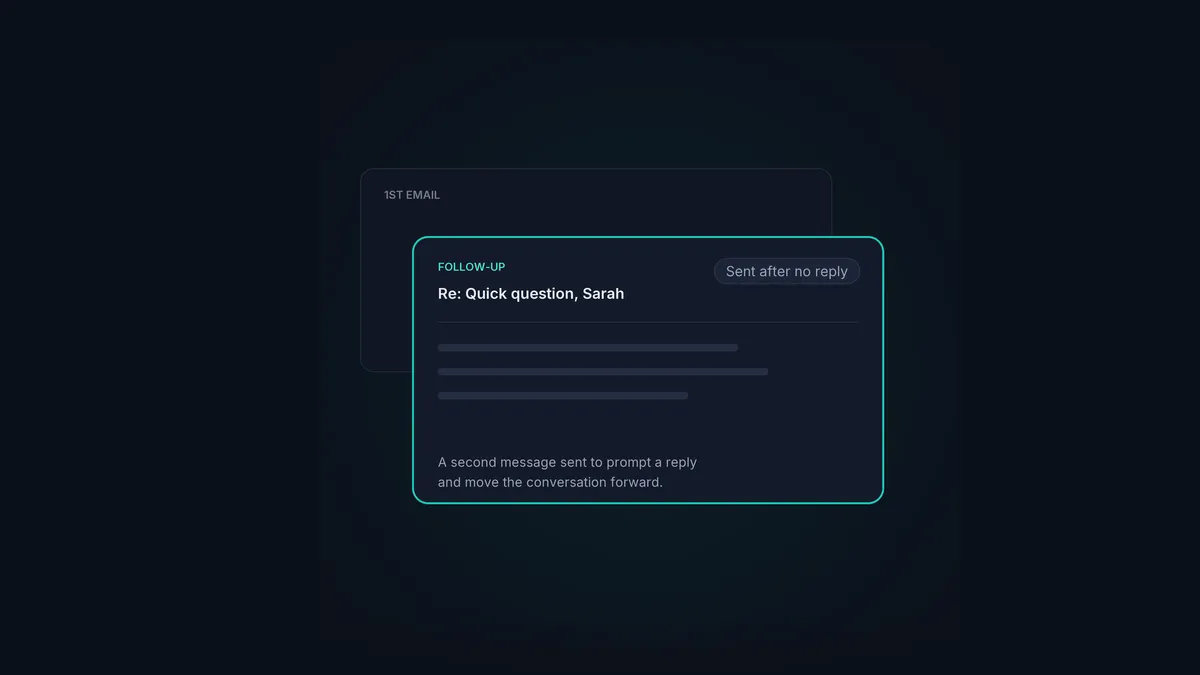
A follow-up email is a message you send after an earlier one to prompt a reply or move a conversation forward. It is the second touch, and often the third or fourth, sent because the first email did not get the response you were after.
That sounds obvious, but the definition hides the important part: the follow-up is usually where the result actually comes from. In cold outreach, most positive replies arrive on a follow-up, not the first send. So a follow-up email is not a nag or an afterthought. It is the part of the job that does most of the work.
What a follow-up email is for
People do not ignore your first email because they have decided against you. They ignore it because they were busy, it arrived at a bad moment, or it slid down the inbox before they got to it. A follow-up exists to catch them on a better day.
It does that in two ways. It gives your message a fresh chance to be seen when the reader actually has time to act. And it signals that you have a real reason to be in touch, which a single one-and-done email never does.
Common types of follow-up email
The word covers a few different situations:
- After no reply. The classic case: you sent a cold email and heard nothing, so you nudge. See the no-response follow-up guide for templates.
- After a call or meeting. A recap email that confirms what you agreed and sets the next step.
- After an application or interview. A polite note to stay top of mind and show interest.
- After a soft no. A light check-in for later, once the timing is better.
The structure changes a little each time, but the goal is the same: prompt a response without adding pressure.
What makes a follow-up email good
A follow-up that works tends to share four traits.
- It adds something. “Just bumping this” teaches the reader you have nothing new to say. A good follow-up brings a fresh angle, a relevant result, or a smaller ask.
- It is short. The first email set the context. The follow-up only needs one new reason to reply, so it can be a couple of lines.
- It stays on the thread. Replying to the original keeps the context together and makes you look like a conversation, not a campaign.
- It is polite and low-pressure. Assume good intent. A warm nudge gets answered far more often than a guilt trip.
When to send a follow-up email
For cold outreach, wait about three working days after the first email, then widen the gaps for later touches. Two to four follow-ups is the right range: enough to catch a better moment, not so many that you become the sender people filter out. The full timing logic is in the cold email follow up guide.
For a call or meeting, send the follow-up the same day while it is fresh. For an application, a few days after is usually right.
Where follow-ups go wrong at scale
Sending follow-ups is simple with a handful of contacts. At volume it gets harder, and the failures are almost always about the reply, not the writing.
The first is chasing someone who already answered. The reply comes in, but the automated follow-up goes out anyway because nothing connected the two. The second is the reply nobody sees, because it came back to a different mailbox or as a forward. Both make you look careless, and both are tooling problems rather than writing problems.
A proper reply management setup fixes both: it pauses follow-ups the moment someone replies, and it gathers every reply across every mailbox into one place so none of them goes cold.
Follow up without dropping the reply
HotHawk runs your follow-ups and captures every reply in one inbox, then stops the chase the instant someone answers.
Start your 7 day free trialA few common questions
What is the difference between a follow-up email and a reminder? Not much in practice. A reminder usually points back at a specific request or deadline; a follow-up is broader and can introduce a new angle. Both prompt a response to an earlier message.
How many follow-up emails should I send? For cold outreach, two to four after the first, spaced out, ending with a polite break-up email. More than that tends to cost more than it returns.
Is a follow-up email rude? No, as long as it is short, useful, and polite, and you stop when asked. Most people expect one or two and do not mind them at all.
A follow-up email is simply the message that comes after the first, sent to earn a reply the first one did not. Treat it as the main event rather than the afterthought, keep it short and useful, and make sure the reply gets seen when it arrives.
