Sales Cadence Examples: The Templates Behind High-Performing Outbound Teams
HotHawk is cold email software for serious outbound teams.
Special offer
Get 50% more sending, FREE.
50% extra sending on any plan, every month.
On this page
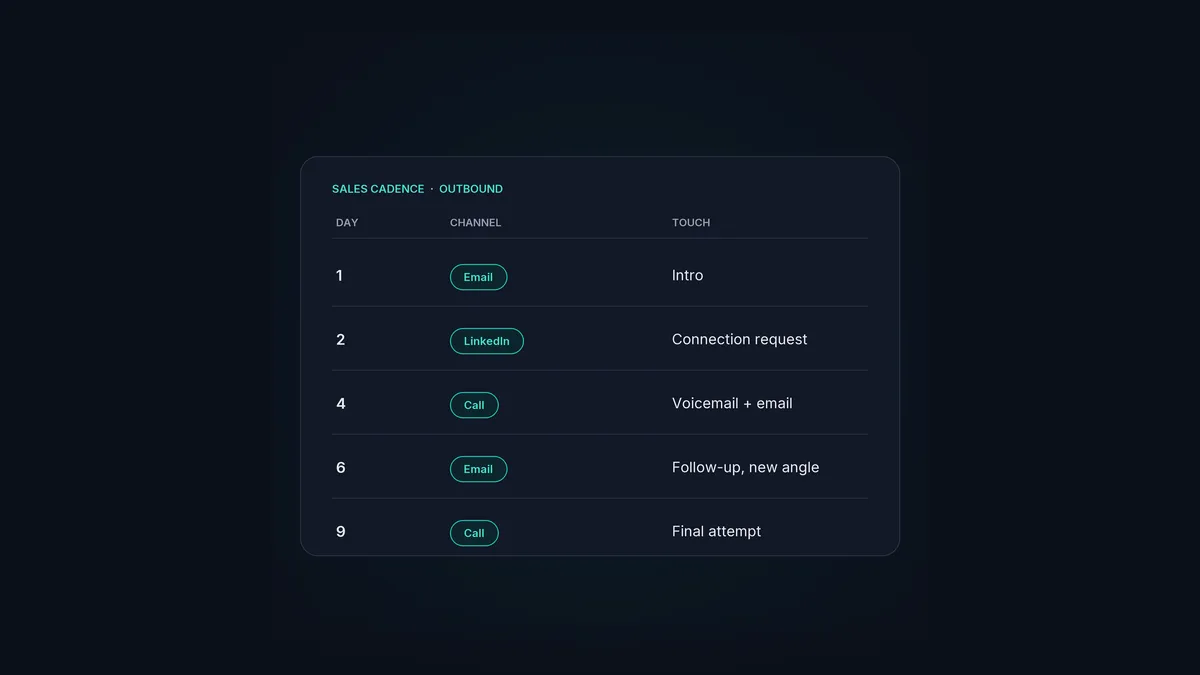
A sales cadence is a planned series of touches across channels, applied to every prospect the same way. The examples below are real-world structures for common B2B situations, each laid out by day, channel, and the job of each touch.
The difference between these and plain email sequences is the channels: cadences mix email with calls and LinkedIn. The email steps run on autopilot through a sequencer; the manual touches are slotted in by the rep. Adapt the structure to your market and team rather than copying it touch for touch.
The short version
- A cadence mixes channels: email is the backbone, with calls and LinkedIn around it.
- Most B2B cadences run 8 to 12 touches over two to three weeks.
- Match the intensity to the deal: high-volume cadences are lighter, enterprise ones slower and more personal.
- Automate the email steps; spend manual effort on the calls and personalised touches.
- Every cadence should end with a deliberate final touch, not trail off.
1. SaaS demo cadence
For booking product demos at mid-market volume. Balanced across channels.
- Day 1 - Email: intro, the problem you solve
- Day 2 - LinkedIn: connection request, no pitch
- Day 4 - Call: voicemail, plus a short email
- Day 6 - Email: proof, a customer result
- Day 9 - Call: second attempt
- Day 12 - Email: break-up
2. Agency new-business cadence
For agencies pitching a service. Credibility-led, with a free value drop.
- Day 1 - Email: a result you got in their space
- Day 3 - LinkedIn: connect and engage with a recent post
- Day 5 - Email: a small free idea or teardown
- Day 8 - Call: reference the idea you sent
- Day 13 - Email: break-up
3. SDR cold cadence (high volume)
For SDR teams running outbound at scale. Lighter on manual touches so it stays sustainable.
- Day 1 - Email: intro
- Day 3 - Email: new angle
- Day 5 - Call: quick attempt
- Day 7 - Email: proof
- Day 12 - Email: break-up
4. Enterprise or ABM cadence
For named, high-value accounts. Slower, more personal, multi-threaded across several contacts.
- Day 1 - Email: tailored intro referencing their specific situation
- Day 3 - LinkedIn: thoughtful connect with a relevant note
- Day 6 - Call: prepared, not a drive-by
- Day 9 - Email: a relevant resource or insight
- Day 14 - Call: second attempt
- Day 18 - Email: break-up, with the door left open
5. Re-engagement cadence
For dormant leads from months ago. Acknowledge the gap honestly.
- Day 1 - Email: reconnect, reference the past conversation
- Day 4 - LinkedIn: re-engage if connected
- Day 8 - Email: what has changed since you last spoke
- Day 12 - Email: break-up
6. Inbound speed cadence
For inbound leads, where speed beats everything. Fast and short.
- Minute 5 - Email or call: respond immediately while interest is hot
- Day 1 - Call: second attempt if no answer
- Day 2 - Email: helpful resource tied to what they wanted
- Day 5 - Email: break-up
7. Event follow-up cadence
For people who attended or registered for an event. Strike while it is fresh.
- Day 0 - Email: thanks and one useful takeaway
- Day 2 - LinkedIn: connect referencing the event
- Day 4 - Email: the recording or related resource
- Day 8 - Call: tie back to why they attended
- Day 12 - Email: break-up
8. Founder-led cadence
For founder-led sales. Light on automation, heavy on authenticity.
- Day 1 - Email: a plain, personal note, no corporate gloss
- Day 4 - LinkedIn: connect as the founder
- Day 7 - Email: one real result or story
- Day 11 - Email: break-up, genuinely no-pressure
Running the email backbone automatically
Every cadence here leans on email as its spine, and those email steps need to go out on the right timing, across enough mailboxes to stay healthy, pausing for anyone who replies. That is the job of an email sequencer: it runs the email backbone automatically, with warmup and inbox rotation behind it, so your reps spend their time on the calls and personalised touches where a human actually moves the deal.
Automate the email spine of any cadence
HotHawk runs your cadence's email steps automatically and catches every reply in one inbox, freeing your reps for the calls and conversations that close.
Start your 7 day free trialA few common questions
What is a good sales cadence length? Most effective B2B cadences run 8 to 12 touches over two to three weeks, mixing email, calls and LinkedIn, ending with a deliberate final touch.
How is a cadence different from a sequence? A sequence is usually email-only. A cadence is multi-channel, adding calls and social touches around the email backbone. See what is a sales cadence.
Which touches should I automate? Automate the email steps with a sequencer. Keep the calls and personalised LinkedIn touches manual, since that is where a human adds the most value.
Pick the cadence closest to your motion, scale the intensity to the deal, and automate the email backbone so your team’s manual effort goes where it counts. The structure keeps everyone consistent; the human touches do the persuading.
